WASP Films


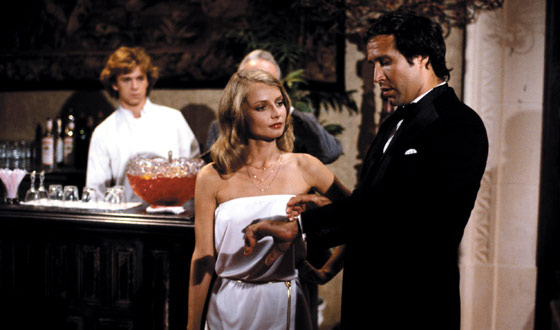
The two great virtues of WASP culture, sport and social skills, are captured in the comedy  Caddyshack, 1980, costumes by Cocheo & Lavery. The film mocks many WASP cliches but for the purposes of this course it also showcases many WASP clothing conventions. It also features Chevy Chase, a 14th generation American on the Social Register since birth.


WASP arises from English and Dutch upper class transplants to the US in the 16th century, followed by Scotch Irish and Germanic immigrants of the 17th century. Describing WASP, the "white anglo saxon Protestant" subculture, is not only about describing ethnicity, but like all groups, describing traditions and social practice. Those traditions are associated with faith, family, education, wealth, athleticism and social engagement.


WASP is both a genuine and constructed category. There are important figures in WASP culture who have written about their role in society just as their are style books and photo essays about the "WASP look."


Above actress Katherine Heigl for Harper's Bazaar July 2010 embodies a WASP stereotype.

WASP meets Prep in Northeast academia where early Americans laid the foundations of American education.

Self Service, September 2009

WASP Films

In 1967, The Graduate was an important film in defining the conservative but stylish American WASP dress, even though the all American post-grad lead was portrayed by Jewish actor Dustin Hoffman. Costumes by Patricia Zipprodt.


Released in 1970, Love Story became the most defining Wasp film that actually brought the term "preppy" into popular use. It was filmed at Harvard and Manhattan with a classic prep color palette, plaids and winter sweaters of Northeastern collegiates. Costumes by Alice Martin.


Wasp intellect and the sedate color palette in Interiors, 1978 costumes by Joel Schumacher


The Wasp family in Ordinary People, 1980, costumes by Bernie Pollack


In 1985, St. Elmo's Fire was a part of a number of Brat pack films. It showed the white Wasp world of DC where suits and ties, pearls and plaids dominate. Costumes by Susan Becker.


Below Sheedy's classic Wasp pearls stay with her even in bed.


Dead Poet's Society from 1989, costumes by Eddie Marks follows the classic prep school protocol. The uniforms are used for in class and athletics. The teachers however take a different earth town color palette in contrast to the dark military colors on the boys.

Restricted by uniforms the boys find other ways to express individuality.


Costume & Identity: WASP by Clara Strehle


‘White‘ by Richard Dyer, 1997

Day of the Dead, 1985

In his essay ‘White‘ Richard Dyer argues that is important to ‘try to make some headway with grasping whiteness as a culturally constructed category‘. There are many studies done about all sorts of groups (black, gays, asian, disabled, etc) but whiteness is a kind of invisible ethnic category that contains a certain notion of dominance and power. As a result Dyer considers different aspects of whiteness in his essay: the color, the association, and the representation, in order to get an understanding why whiteness is an invisible racial position. He believes that it is partly due to the color white itself, which stands for everything and nothing, it is the absence of all, and therefore can be all colors. It is associated with safety and light. However, non whiteness is necessary to give whiteness a substance, it is dependent it. White is only attached to good values and to nothingness, because black is considered danger and disorder and is always marked as a color and particularized. Other cultures have a historical and cultural construction evolving out of oppression and other sorts, whereas white is just ‘there‘. In order to illustrate his arguments about the connection between whiteness and good values such as order, rationality, etc. he represents three movies where non white characters play a significant role and bring out these qualities through contrast: Jezebel (1938), Simba (1955), and Night of the Living Dead (1969). Here, Dyer analyses in detail the virtues of whiteness that justifies the good associates and dominance since it is only through other cultures that white gains such importance. White is dependent on black. Simba, he argues after a long analysis, is an endorsement of the moral superiority of white values of reason, order and boundedness, nevertheless the movie suggests a loss of belief in their efficacy. Although the film follows this strong binarism it allows for the chance of a black person becoming ‘white‘ creating anxiety which is the foundation of its narrative. In Jezebel a connection is made between the relationships of whiteness to blackness in terms of materials and emotional stands. Although the black characters do not take on a evil or dramatic role they act as an important part in conflicts between whites and moreover demonstrate that whites live by different rules. Lastly, in Night of the Living Dead blackness is used to demonstrate a separation from the norms, where practical skills learned and no dependency on others saves one‘s life. Whites are the living dead, they cannot be distinguished from the zombies due to their pale skin and are just as bad of behavior as them in terms of attacking and carelessness. After having discussed whiteness in terms of movies Dyer goes on into photography where he argues that through the ‘unreal angel glow‘ white women are made to be the most desirable of all, but never to be touched or reached. Once again, the notion of nothing and all.

‘Born in the USA‘ Paul Rudnick - Vogue, Febuary 1989


Rudnick starts his opinionated VOGUE feature of by explaining what a WASP is and wears: an upper class, preppy dressed subculter. Currently (that time 1990) widely defined and represented by people such as Woody Allen or Ralph Lauren who made use of the WASP in their ads or movies. However, in Rudnicks opinion a true WASPs wears bright colors, patent leather bags, etc. and the men wear corduroys and gray cardigans. They shop religiously at Hallmark and Brooks Brothers. In addition Rudnick finds them ‘hilarious‘ in the way they act or talk. He concludes, however, by stating that America always comes through to everyone, democracy overcomes the WASP style; be it through Madonna‘s corsets or Whoppi Goldberg dread locks.


‘Metropolitan Chronicles Preppy Angst‘ by Alessandra Standley - The New York Times 1990


In this article Stanley gives the reader an overview of the background of the movie Metropolitan and its film director Stillman. Coming from New York‘s upper class, having lived the high life, studied at Harvard, and being a socialist Stillman collected his memories and made his first low budget movie called Metropolitan without any prior experience. Critics loved this charming, romantic comedy, for which Stillman sold his New York apartment, and compare it to old 30s movies starring, for instance, Audery Heburn. In order to describe the habitat and condition of setting and characters in the movie the director invented the term UHB: Urban Haute Bourgeoisie. Stanley goes on into elaborating the movie‘s plot in which Tom Townsend falls into the Sally Fowler Rat Pack when coming home from Princeton to his families Park Avenue apartment in New York. The main theme here and in the movie is the upper middle class failure, which describes anyone coming from a wealthy protected environment entering the world outside is scared of no accomplishment since one has no where to do but down. Stillman feels a strong personal connection to this because he himself says that ‘until we started shooting I felt I was on a long road to nowhere‘. Although not being known in the movies industry Stillman managed to get several investors through little contacts to trust his project blind, one of them tells the journalist that his spirit simply convinced her and that he was ‘uniquely driven‘. None of the actors had prior film experience, however that the actors were supposed to just act as themselves. The text sums up by giving a brief overview of his life from sophomore year till the present day (back then 1990) which demonstrates close relationship to his protagonist Tom.

‘The Official Preppy Reboot‘ Exerpt from True Prep by Lisa Birnbach, August 2010


This text taken out of the book True Prep contextualizes in a funny way the return of the prep in modern days. Birnbach gives following qoute: “we have to think about how life in the 21st century affects our safe and lovely bubble“. Therefore she gives an exact instruction list of what a prep is and how he / she has to behave and dress. This list goes from ‘Luggage tags!‘ to ‘Bags and shoes need not match‘ to ‘Preppies don‘t perm their hair‘, concluding with ‘The best fashion statement is no fashion statement‘. Preppies are not to wear logos apart from Lacoste, Fred Perry, Ralph Lauren, and Vineyard Vine. The biggest fashion faux pas and ‘end of civilization as they know it‘ for the prep is Juicy Couture tracksuits. Birnbach argues that preps have undergone the biggest change in the last 30 years, by giving examples such as children carrying portable phones. Her last two instructions for the modern day prep are to always watch out for great quality, how and where to travel, and which jobs would best work for modern day society.
This outtake by Lisa Birnbach is a long list giving a clear image of how to be a prep nowadays and the rules to it.

Case Study: Robert Redford


Robert Redford received an Academy Award for directing Ordinary People in 1980, and also a second Oscar for Lifetime Achievement in 2002. Redford played a number of classic costume roles. Above, Butch Cassidy & the Sundance Kid, 1969, costumes by Diana Wilson, follows classic Western protocol. During 1974, Redford was filming 2 different films with different, equally strong costume styles - The Great Gatsby and 3 Days of the Condor.

The Great Gatsby is Fitzgerald's story of a man driven by wealth and love. It is set in the early 20th century New York area. The film won an academy award for Best Costumes by Theoni Aldredge.

Redford as Gatsby in one of the many suits featured in the film. White dominates the color palette, accented by light blue and golden yellow.

Defining accessory - the Fedora.
Below the early 20th century swimsuit defines the aesthetic of the scene.


3 Days of the Condor had costumes designed by Joseph Aulisi. The film was set in the present of 1974 New York. It takes place over 3 days but Redford plays a CIA agent Joseph Turner on the run, so he only has one look for the entire film. He wears a tweed jacket over a blue shit, brown tie and jeans, with an occasional black sweater or black pea coat.

Also known as 3 Days of the Collar


Defining accessory - Ray Ban Aviators


Case Study: Al Pacino


Al Pacino above as police officer Frank Serpico 1973, costumes by Clifford Capone. Pacino is best known for playing gangsters. Below left Michael Corleone of the Godfather series 1972-90 and right Tony Montana of Scarface, 1983.


Godfather I is set between 1945-55 and established Corleone as a military hero by dressing him in uniform in the first part of the film. When the suit wearing follows his character ages. Costumes by Anna Johnstone.

Godfather II costumes by Theodora Van Runkle, follows Corleone expanding the family business. He is shown exclusively in dark colors and black business suits.

By Godfather III, 1990, Pacino is a patriarch and shown again in the dark classic business suit. Costumes by Milena Canonera.


Scarface is a sharp contrast with costume. Pacino portrays Cuban gangster Tony Montana in Miami. Costumes by Patricia Norris emphasize a light and bright color palette with dominate whites and bright reds. All dresses and suits were custom made for the film.

The lightweight linen chosen for both the male and female suit are characteristic of the Miami climate.


The tux is perhaps the only look which would could link to the Godfather series.