The "White Witch" from The Lion, The Witch and the Wardrobe

by Lucinda Bellm


Tilda Swinton’s out fit as her character Jadis, the White Witch was designed by Isis Mussenden, a renowned costume designer who graduated from Parsons School of Design, who has also worked on other films such as Shrek.

The costume really went against any other stereotype of a witch being ugly and dark with the traditional black pointy hat, instead Mussenden and Swinton went with the idea to make her as Aryan as possible, more Nazi like, which was appropriate as the film was set during the 2nd World War.

Mussenden describes the White Witch being her most challenging design during the film in which the final outfit was actually inspired with the help of production designer, Roger Ford and her 4 year old son who actually came up with the idea of the witch “evolving” rather than “changing” clothing”.

The dress was made to look as though the witch had covered herself up in a bit of Narnia. The witch’s outfit carries a lot of symbolism, in which the materials and fabrics were sourced from all over the world to create the effect it had. The first layer of the dress is a velvet dyed, the second layer is felted wool and silk, it is the sheen of the silk that created these icy lines and then the final layer is lace with metallic thread and organza pieces that are sewn and burnt into the fabric. The bottom of the dress is made from a substance that reminded her of this waterfall they saw in New Zealand which projects connotations of the witch being made from water or ice. Then they drew the ice crackle from a small scale to a larger scale at the hem of the dress to create this illusion of height, that the witch was a giant. Other symbolic aspects of her outfit were her ice crown that melts throughout the film and her hair looking like roots from the ground. Overall all these aspects of her costume was what created this organic giant ice queen witch like character.

2000's


In The Royal Tenebaums (2001), fashion plays a important role in characterization. The characters are defined by particular looks that play a subtle comic element in the film. Costumes were designed by Karen Patch.


The looks of the children influence their later looks, especially Margot and Richie. Margot is featured in stripes a child and an adult while Richie maintains his athletic look with headband until his character is transformed.


Margot's sophistication as a child transfers to the signature fur coat look below left. An earth tone camel color dominates Margot's looks and several characters in the film.


Above both of Margot's lovers are in the same earth tone camel, which re-appears below on the father as well. Chas, played by Ben Stiller below right, keeps a distance from the rest of the family indicated by the bright red track suits also worn by his sons.


In Ghost World below from 2000, the characters were based on pre-existing cartoons. The costume designer had to bring to life two-dimensional figures of the imagination. Mary Zophres was the costume designer for this noir comic book aesthetic.


Sophie Carbonale created the look for Legally Blonde (2001) taking inspiration from Goldie Hawn in Shampoo and Los Angeles sorority girls and their love of pink.


Betsy Heimann constructed all of the clothing for Almost Famous (2001). She based Kate Hudson's jacket on a look in The Apartment (1960) in combination with groupie style from her own experience at the Continental Hyatt House in the 60's.


The 2000's see similar films emerging at similar times. Above Chicago (2001) costumes by Colleen Atwood shares the cabaret aesthetic with Moulin Rouge (2001) by Catherine Martin & Angus Strathie. Below, the Harry Potter films begin in 2001, featuring long robes and bearded wizards, costumes by Judianna Makovsky. Also in 2001, the Lord of Rings appears with long robes and bearded wizards, costumes by Nglia Dickson & Richard Taylor.


Above, Troy from 2004 shows the Spartan soldier look. The costumes by Bob Ringwood emphasize the raised brush on the helmet, breast plates, fabric skirt bottoms and the long spears specific only to Sparta.

Above left is the original Greek soldier look which would have been a naked or loosely wrapped man with a small helmet, short knife and large shield. The Spartan, described above, introduced the breastplate, helmet with brush for cleaning shoes and the long spear. Finally right, the most recognized aesthetic of the Roman gladiator. His look used the short knife of the Greek but took the breastplate and helmet with brush from the Spartan and considerably reduced the size of the shield. Below Gladiator from 2000 with costumes from Janty Yates. Crowe plays gladiator general Maximus who comes up against the heir to the throne Commodus. During the Roman empire, royal figures were obligated to fight gladiators once a year to prove their strength, however the royals often had the gladiator's arms broken before the battle to ensure royal success.


Below the Ocean's Eleven phenomenon that emerged in 2001 was based on the Rat Pack film of the same name from 1960 featuring Frank Sinatra, Dean Martin, Sammy Davis, Jr., Peter Lawford, Joey Bishop and Rob Davis. The films emphasize suits for all characters in order to allow the clothing to be a background to the diversity and personalities of the celebrities.


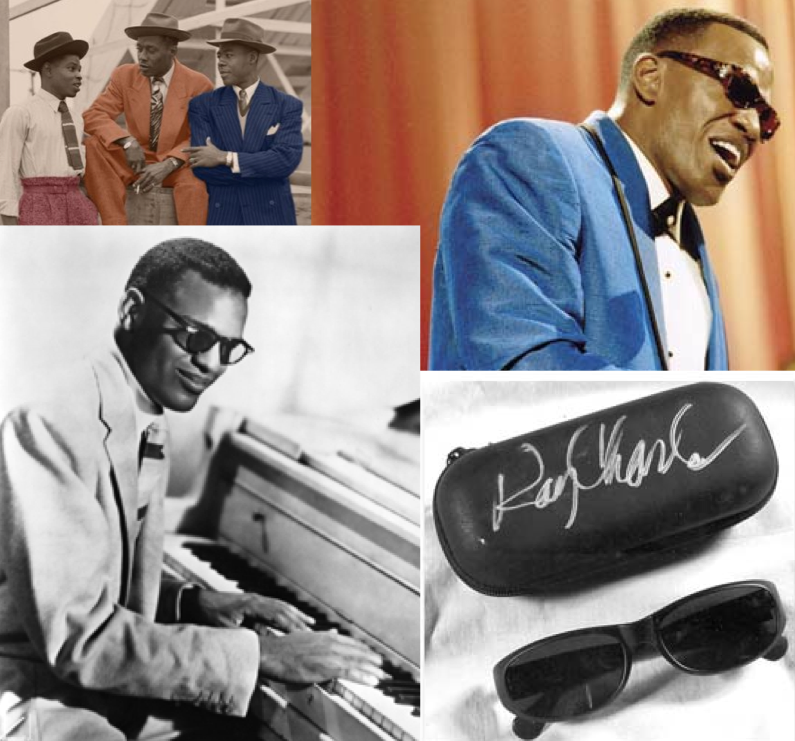
Resemblance characterization became extremely popular in the 2000's, Above Ray (2004) by Sharen Davis emphasizes the importance of the suit and led to Ray Charles sunglasses being released. Below Walk the Line from 2005 had costumes all personally created by Arianne Phillips.


Above the resemblance characterization of Frida from 2002, costumes by Julie Weiss. Below Aviator from 2004, costumes by Sandy Powell. The representation of Katherine Hepburn included the iconic masculine look but also showed the more feminine side of the actress.


Below Brokeback Mountain from 2005 was the result of costume designer Marit Allen's investigation into cowboy subculture. Levi's are for horse ranchers. Wranglers are for cow ranchers. This subtle distinction is loaded in the subculture. Below the characters are similar but the key transformation is Jack's character who starts with a black Texas style hat and then ends the film with a light colored hat the resembles Ennis' Wyoming hat.


Indie cinema and its eclectic quirky style resulted in challenges for the fashion designers. Above the complex narrative and character development of Eternal Sunshine of the Spotless Mind (2004) led the costume designer Melissa Toth to change the hair color of Kate Winslet from blue to orange, as well as costumes. Below Little Miss Sunshine from 2006 had a rainbow color palette created by Nancy Steiner that emphasized the bright primaries throughout.


Well know for her strong use of thoughtful color palettes, Milena Canonera created the costumes for The Life Aquatic with Steve Zissou in 2004. She combined the ocean blues with the bright orange of a life jacket and white, seen on crested waves and clouds.


More indie films with quirky thrift store characterization continued in Napoleon Dynamite from 2004 by Jerusha Hess and Borat from 2006 by John Alper.


Quentin Tarantino led the way in the 90's for establishing post-modern indie character looks but he turned to well established costume designer Anna Sheppard for Inglourious Basterds in 2009. Sheppard was responsible for previous war epics Schindler's List and The Pianist and created all of the costumes her self with a Berlin Taylor. The unique hat below left was inspired by Elsa Schiaparelli right.


2000's by Lucinda Bellm


Modern Mode: Film Costume Design in the Here and Now by John Calhoun
(Published 1st March 2000)

John Calhoun gives us an insight into costume design by quoting various famous costume designers. At the beginning of the essay he puts an emphasis of the difference between dressing contemporary and period film, and the difficulty and hard work put into both. He goes onto quote Betsy Heimann on costume in film today “The problem with contemporary film is that everyone has an opinion, and believes that their vision of the 1970’s or last year is the vision...in a period movie, everybody pretty much accepts that your right”.Throughout the article Calhoun regularly quotes Betsy Heimann and Jeffrey Kurkland and their different opinions on the subject of costume design. He goes onto quote Kurkland for a substantial part of the article on the subject of the costume in the film “Erin Brockovich”. He talks about he film being an interesting case for contemporary film as he had something real to research, real looks she once wore from pictures the real Erin Brockovich had to show him. But that resulted in 52 changes in clothing throughout the film and having 75% of all the costumes made, it was important for him to “achieve a unity in her look”. Calhoun goes onto focus on Mona May, a German costume designer who had previously had a fashion based career. She has does the costumes for many fashion esque-films such as “never been kissed”, “Romy and Michele's high school reunion” and clueless and says she pulls inspiration from European trends as they are often 6 month ahead of the states, she emphasis the fact that with films like these, you have to be innovative and fresh with your designs as it is usually a depiction of real life at the time, but then of course it will take a year for the film to come out. Calhoun goes onto to focus where different costumes designers buy costumes or where they have them made, this can include anywhere from studio wardrobe departments to resale shops, to K mart, it is all depended on the film. At the end of the article he discusses costume design in relation to the fashion industry. He quotes Kurland “fashion, you design for people; costume you design characters”, whereas Mona may states a different opinion that the “conjunction of fashion and costume design is an exciting thing.”


Interview Inglorious Basterds: Costume Lowdown by Anna Sheppard (Published 29th September 2009)

This is an interview with Anna B Sheppard who is a polish costume designer. She has worked on films such as Schindlers list, the pianist and this interview is on her most current film Inglorious Basterds, Tarantino’s latest film.

The interview is very informative with first hand answers from the costume designer herself. It gives the reader an exclusive insight into the unique period look of the film. Sheppard refers to her costume design in the film as a more flamboyant version of costume that is historically correct. The interview is really a focus on some of the characters main costumes that appear throughout the film, where they were either made, sourced or how she was inspired to design them. She states that all the jewellery in the film is from her own personal collection that she has collected since her work on Schindlers list in 1993.


Deborah Nadoolman Landis “Dressed, 2000” (Published in New York 2007)

This is an informative article on an overview of the past decade in Hollywood referring to it as the “digital revolution”. It was the beginning of the craze for DVD’s, which was quickly taken over by video games and

the Internet. Landis also discusses film undergoing a digital revolution with films such as Shrek being made. But she does go onto say that this technology can be a good and bad thing for costume designers. Digitally computerized models meant no need for these huge budgets for clothing, as well as animated productions and video games needing costume designers as well. However she does focus on the expanding role of the costume designer in unexpected ways with the new technology of the green screen sometimes being a problem for costume design. Landis discusses that costume designers have done what they needed to do, over the last few decades in films to get the job done encountering problems with a smaller budget, time and various other factors so with this new technology they will do the same to adapt and move with the various challenges and opportunities. Landis praises the role of a costume designer as “unique” and how they play a predominant role in helping the director to tell a story. The images at the end of the text go onto to show us a decade of great costume ranging from period costume such as “Troy” to contemporary costumes such as “Legally Blonde”


The Fifth Element (Clara Strehle)


Instead of taking any costume designer Besson chose to work with a high end, french fashion designer: “I wanted the best and that is Jean - Paul Gaultier.“

Gaultier is known to be the Enfant Terrible dela ModeI because of his extremely provocative and experimental style; for example he created a man skirt in 1985 and is the designer behind Madonna‘s famous cone bra. Before The Fifth Element his designs were seen in movies such as Kika and The City of Lost Children. For Besson however he let his imagination run wild more than ever, in a way it is impossible in haute couture, even for him. Gaultier created a future look defined by unusual materials and looks inspired by the past: “I spoke with Luc about what is futuristic, and we decided that there could be elements of today... Everything is possible“3. His signature style however is still very evident in the crinoline hoops worn on the outer side of clothes, very feminine male costumes, or ripped dinner shirts.

The two protagonists of the movie, Korben, played by Bruce Willis, and Leeloo, played by Mila Jovovich, wear some of the most provocative and typical clothes of Gaultier‘s. Their outfits and color palettes are put in strong relation: she wears white and orange, he wears orange and black. The ribbed, backless, orange tank of his, accentuating the manly arms and body, is in resemblance to Leeloo‘s orange dreadlocks. In the second half of the movie Gaultier put him into a tuxedo in order to blend in with the other guests of the opera on his undercover mission. As he looses his cover and the fight grows bigger, his shirt gets more and more ripped apart, underlining more and more Dallas‘s heroic - ness. On the other hand, Leeloo‘s white ‘dress‘ is made out of the white cloth that restrained her to the incubator table she was created on in the lab of the scientists. They simply tie around her as she breaks free. In the second half, when the focus of Leeloo lies more in fighting, than in escaping, her outfit contains heavy black boots, golden pants, orange plastic straps and a cropped white ribbed shirt giving her firmity and robustness for the fight; qouting Gaultier: “The costume has to go well with what she has to do. She has to be very active.“4


The priest Vito Cornelius, played by Ian Holm, is constantly dressed in earth tones. He resembles a wise old man holding much knowledge and secrets about the past. His clothes and color palette match this with knitted pullovers, pleated trousers, and to the floor long capes.


Throughout the movie there is a consistent differentiation between public work places, and homes or ‘fun‘ places. The official and public world is dark, metallic, cold, and negative; seen in, for instance, the city of New York, or the hallway in front of Korben‘s apartment. The colors are ranging from an ice blue to black. There is no sensation of positivity or hope in this world. Everything is controlled and no real freedom is given. On the contrary, homes and Fhloster Paradise is dominated by yellows, golds, browns, and reds. Life is given a more positive feeling. For example Korben‘s one bedroom apartment is entirely colored in a yellowish tone, in addition filled with personal belongings and memories such as pictures; whereas the evil Jean Baptiste Emanuel Zork has nothing personal in his home. Although Zorg‘s home is yellowish in color as well, it is filled with robots, weapons, and other creations underlining the loneliness and cold hearted souls of evil.

The last, and visually most interesting main character is the villain of the story Jean Baptiste Emanuel Zork, played by Gary Oldman. Zorg pretends to be an art dealer, when in real he builds and sells arms, and above all and most importantly though, is highly interested in getting a hold of the four element stones.

Luc Besson identified Zorg‘s style as “dandy, nouveau riche, Hitler“5 and when talking about his character Gary Oldman simply explains Zorg as a “Galactic Trailor Trash“ and “Bugs Bunny meets Ross Parole“6. Generally, Zorg comes about as a comic villain with a twist. His outfits are made out of shiny rubber, he has a metal leg, and a plastic piece on his head which is only explained by the words: “...it‘s just the strange, wacky world of Jean Paul Gaultier“7.
Zorg‘s first outfit, which he wears when out on business, is a futurized look of a business man involved in shady, underground business. This look appears when he is selling guns to the aliens and when coming to collect the stones from Fhloster Paradise. The costume is inspired by the SS uniform back from the Hitler days. He wears a dark blue, pinstrip suit made out of rubber. The pants are stuck into high boots and the shirt has high collar, both very typical in SS uniforms. Matching to the suit Zorg has a coat with a red inside. Here Gaultier‘s sense for detail becomes extremly obvious: The red inside is only seen twice in the movie, both times right before an explosion initiated by Zorg. The red color links first to the red button on the arms, and second to the time display of the bomb placed on Fhloster Paradise.
Through the dark and cold color palette Zorg blends in with the gloomy and evil atmosphere of the moment and space it is situated in. Both aspects contribute to underlining his character and the mischief he is about. However, at the same time, with his strange head piece and the funny accent from Arizona, he becomes this comic villain which Besson planned him to be.


Zorg‘s second outfit is seen when he is in his home. It consists of the same boots and pants as before, but instead of a pinstriped dark vest, he wears a rainbow colored vest also with a high color. When wearing this outfit he is in his personal space and is more vulnerable than when out on business. this can be seen, for instance, when the evil Mr Shadow calls and punishes him for not retrieving the stones. The color palette is much warmer than the one from outfit one, but again it stands in relation to its surroundings. However, in comparison to Korben‘s or the priest‘s apartment, everything here, just like the owner himself, is cold and has nothing positive to it. Zorg surrounds himself by weapons and robots mirroring his loneliness. When Vito Cornelius is brought to his office this especially becomes visible as he swallows a cherry and has noone to save his life.


Concluding, Zorg‘s rubberized, shiny outfits give him a notion of distance to humanity. His character has nothing personal to him since all he surrounds himself by are aliens, robots, or weapons. Nevertheless, this is also what makes Zorg funny and look like a comic villan. Gaultier‘s work had great participation at succeeding at this task through his own strangeness, off - ness, and provocativeness.

Apart from the great detail payed to each single one of the main characters, Gaultier did not miss out on losing focus when it came to small roles. For example, all of the majors, sailors, captains, and such, are dressed in a very classical way in which we see them today as well. They also add to the Gaultier style with the trademark rings on the sleeves and much gold. More attention to detail can be seen in the radio host‘s all lepard outfit or black jump suit with red roses decolletage, Zorg‘s funky all in blue receptionist, the chanel make up box version year 2262, the stewardess (inspiration taken from the Air France staff ), even the McDonalds service. Gaultier did not leave out a thing and as Luc Besson said he checked every single outfit himself before letting it appear on set.

The Fifth Element is full of interesting and unusual materials defining a futuristic look inspired by today and humanity‘s past. Gaultier matched moods, setting, characters relation, and activities perfectly with their costumes and created, in my opinion, one of the visually most strongest movies.

1980's Teen Films & the 1990's


Fast Times at Ridgemont High (1982) is a teen classic that showcased California teens in school and at their after school jobs. The jobs required odd uniforms, from fast food above and below, to movie theater tuxes to pirate hats. The uniform is an important element to teen life in school athletics as well.

Spicoli is the only main character who is not seen in uniform. He plays a surfer who's casual t-shirt and jean aesthetic is still common today.


Costume designer Marilyn Vance is responsible for Fast Times and a number of other iconic 80's teen films.

In Sixteen Candles (1984) Molly Ringwald plays the lead who is consistently in solid pastels, the same colors worn by those in her circle. The man she desires however wears plaids, and classic prep colors and patterns.

Ringwald and Anthony Michael Hall appear again a year later in The Breakfast Club and have similar looks in solid earth tones, Ringwald in pink.


The Breakfast Club brought together teens that each represented a different circle, evident in clothing.

The clothing is also representative of American style, mainly denim, khaki, sportswear and cottons. The teens oppose one character in the film, which is common to teen films - the principle or teacher figure who is always a man in a suit.


Judd Nelson plays the delinquent who arrives mysteriously in the film in sunglasses and trench coat and is slowly unveiled. The film is only 1 day so the clothing is limited but the characters unveil themselves by removing layers as the grow intimate with each other.


The greatest character transformation is with Ally Sheedy who begins covered and a bulky jacket and then it beautified by Molly Ringwald's character.

Emilio Estevez plays a jock in sportswear and while the look is limited, he transforms through removing layers, playing with clothes and in the end wearing the all American sports jacket.

In Pretty in Pink (1986) Vance was influenced by the Miami Vice look of the moment and emphasizes suits for the more established male leads while Molly Ringwald's world this time is a more eclectic thrift store aesthetic.


The record store is important to the look of the film. Below 2 key looks in the film are the dress worn when Ringwald attends a party. Her effort to look well dressed and conservative finds her looking over dressed for the party. In the last scene she adapts her mother's pink dress into her prom look.


Above Heathers (1989) dressed the high school girls in sophisticated, mature suits, replayed in Clueless (1995) below.

The promotional images for Clueless below emphasized the film as a shopper's movie. The main character is a fashion victim who's identity is at first contingent on purchase but is slowly transformed. The film also includes character transformation as the main girls help an outcast improve her appearance.


The 1990's teen scene was dominated by grunge. Kurt Cobain helped popularized the look of striped and plaid shirts, torn jeans and converse. The look was re-created for Last Days right, 2005.


Below Dazed & Confused (1993) showed the slacker teen aesthetic of the 70's revived by grunge and emerging hipster style


Some of the most significant stylistic films of the 1990's were created by Quentin Tarantino. He referenced styles from previous films, especially in his creation of Uma Thurman's character for Pulp Fiction which was based on Anna Karina.


Later on Tarantino used the iconic Bruce Lee uniform for Uma in the Kill Bill series.

Fight Club (1999) was another influential style film. The two main characters wear suits, though Brad Pitt has a more colorful, thrift store look and emphasized tanks as well in the film.


The fighter tanks were influential to Versace in 2000 and Gaultier in 2010.


Pretty Woman (1990) also by Marilyn Vance uses costume for transformation as Julia Roberts' character goes from a sports bra wearing call girl to a more well dressed lawn party guest.

Edward Sizzorhands, costumes by Colleen Atwood in 1990, shows an extreme costume in combination with prop designers. The hands were combined with dramatic looks such as the lab coat left and biker look right.


The comic Austin Powers series was based on research by designer Deena Appel who used photos of London's Carnaby Street to create look.


Titanic featured Oscar winning costumes by Deborah Scott. She deeply researched the history and the looks of the wealthy at the time period.


The end of 1990's also saw the intersection of costume and gender identity. Below Boys Don't Cry (1999) and Shakespeare in Love (1998).